
Exactly What Happens
to Your Rig
We don't sell mystery. Every product, every dwell time, every reason. By step four you'll understand the difference between a wash and a correction — and you'll feel the expertise in the specificity.
Strip the road before you touch it
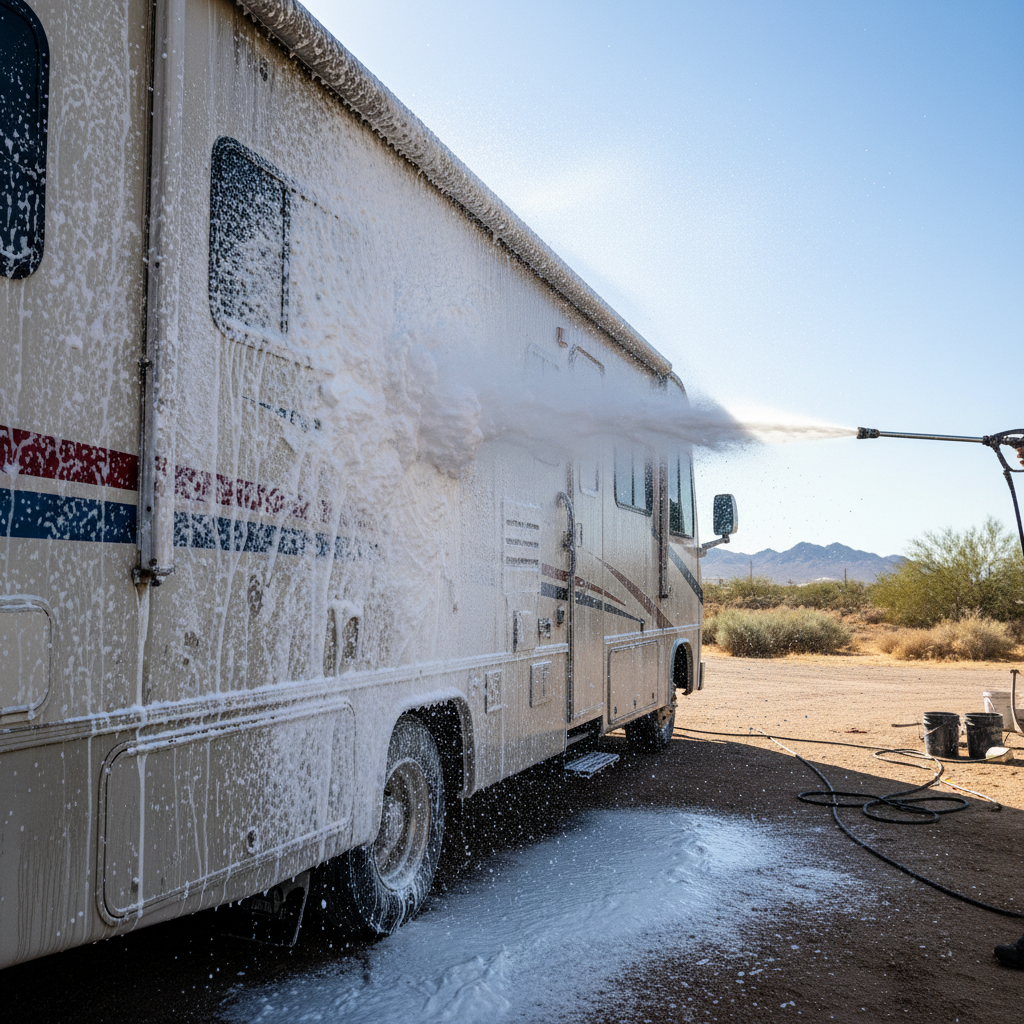
We don't start scrubbing. First, a 1,200 PSI rinse knocks loose road film, bug protein, and surface dirt from every panel. Then a pH-neutral pre-soak — Meguiar's D101 diluted 1:10 — dwells on the skin for three minutes, chemically releasing the bond between oxidation and gelcoat so the next stage doesn't abrade what it should be saving.
Iron fallout doesn't wash off — it has to be dissolved
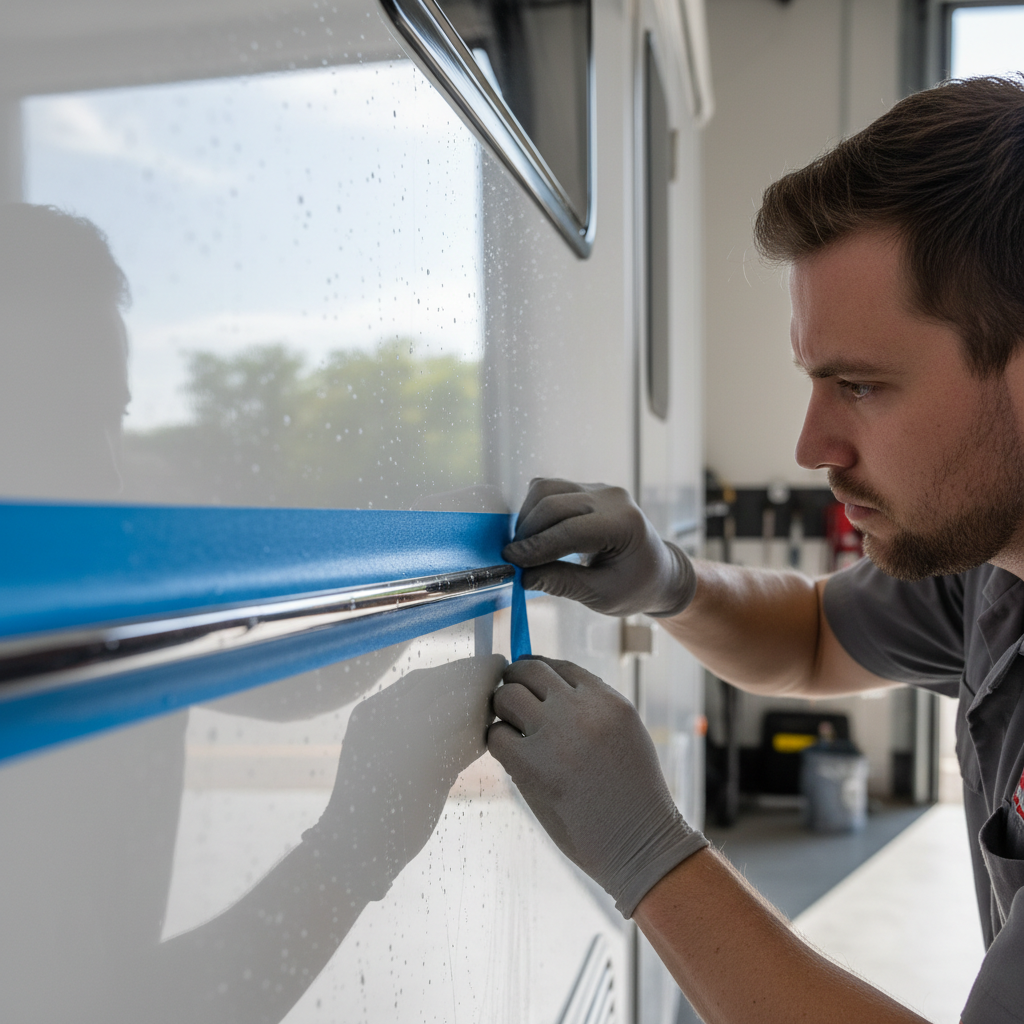
Road brake dust embeds in fiberglass and gel coat as tiny ferrous particles. A standard wash leaves them in place. We apply Gtechniq W6 Iron & Fallout Remover — it turns purple on contact as it chelates iron particles, pulling them out of the pores. Clay bar follows on all painted and fiberglass surfaces, revealing a smooth substrate that compounds and sealants can actually bond to.
Oxidation is a depth problem — you have to cut to it
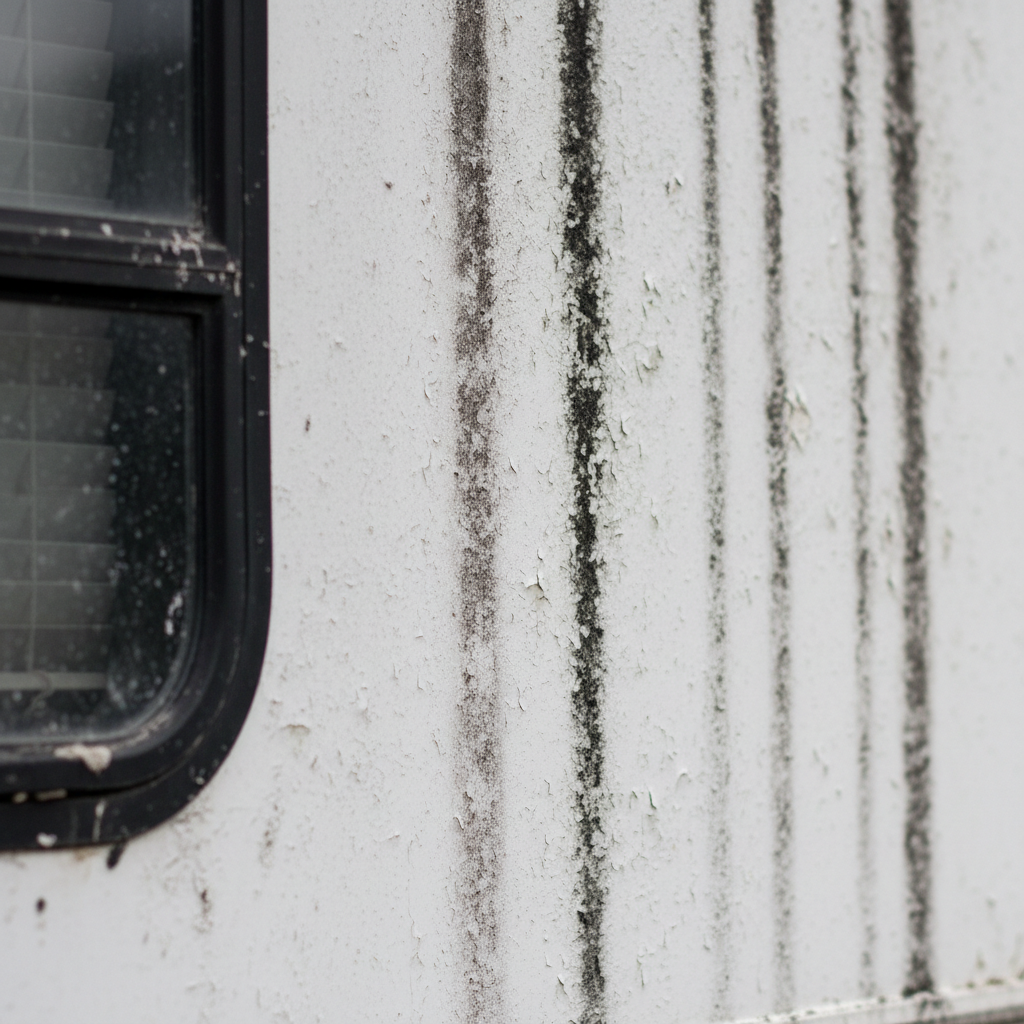
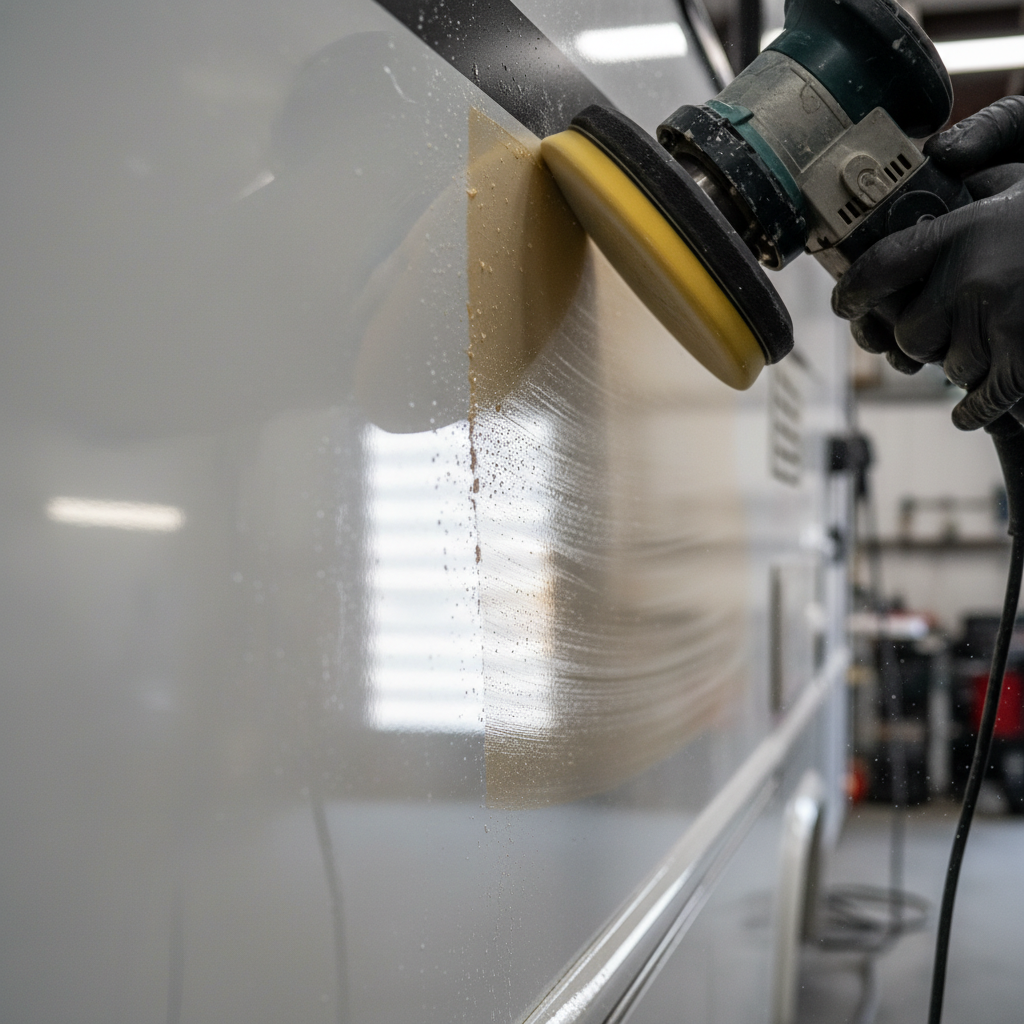
Chalky, faded gelcoat is oxidized fiberglass — the UV-damaged layer has to be mechanically removed to expose the live color underneath. We use a 6-inch forced-rotation polisher with Meguiar's M100 compound on a medium-cut foam pad, working 2×2-foot sections at speed 5. Cycle count varies by severity — we check gloss meter readings after each pass. Mild oxidation: two passes. Severe: four, with a follow-up step using M205 Ultra Finishing Polish to eliminate any micro-marring left by the compound.
What you just restored needs a reason to stay that way
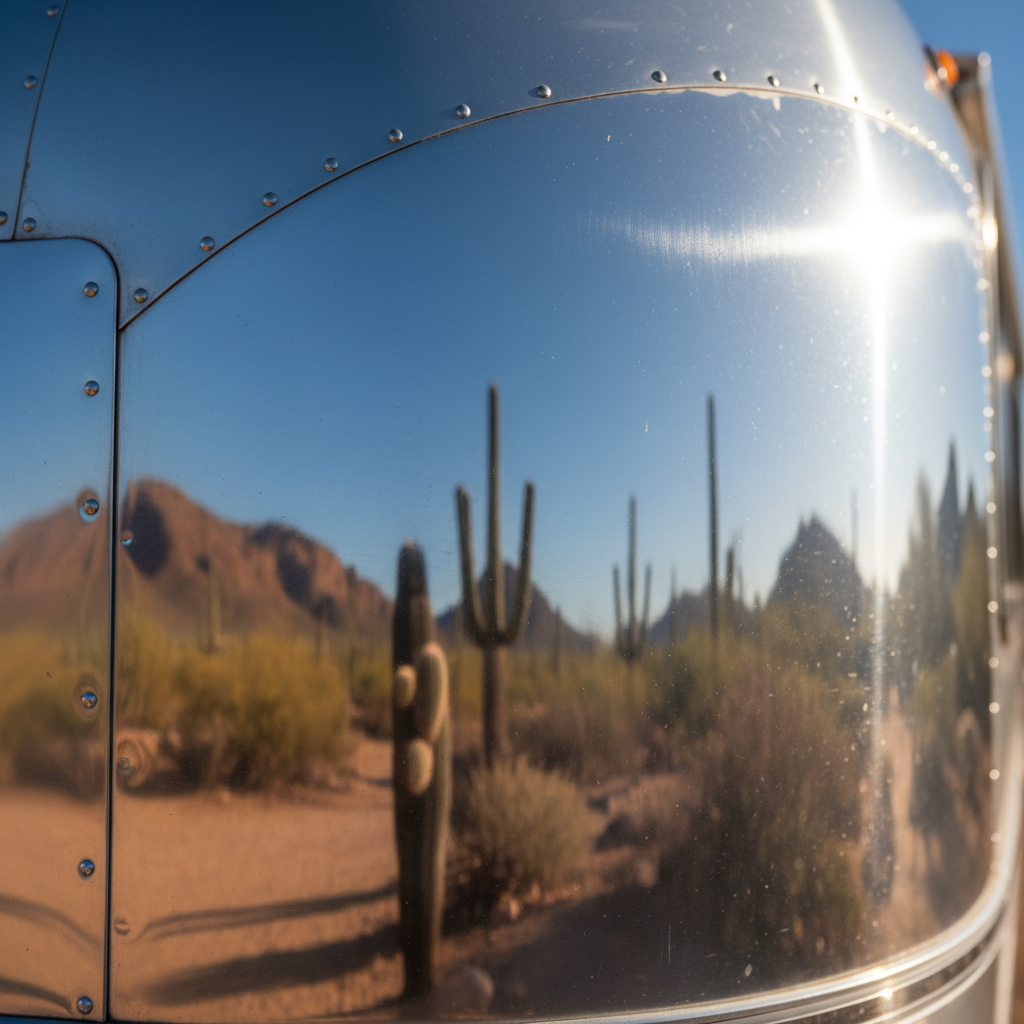
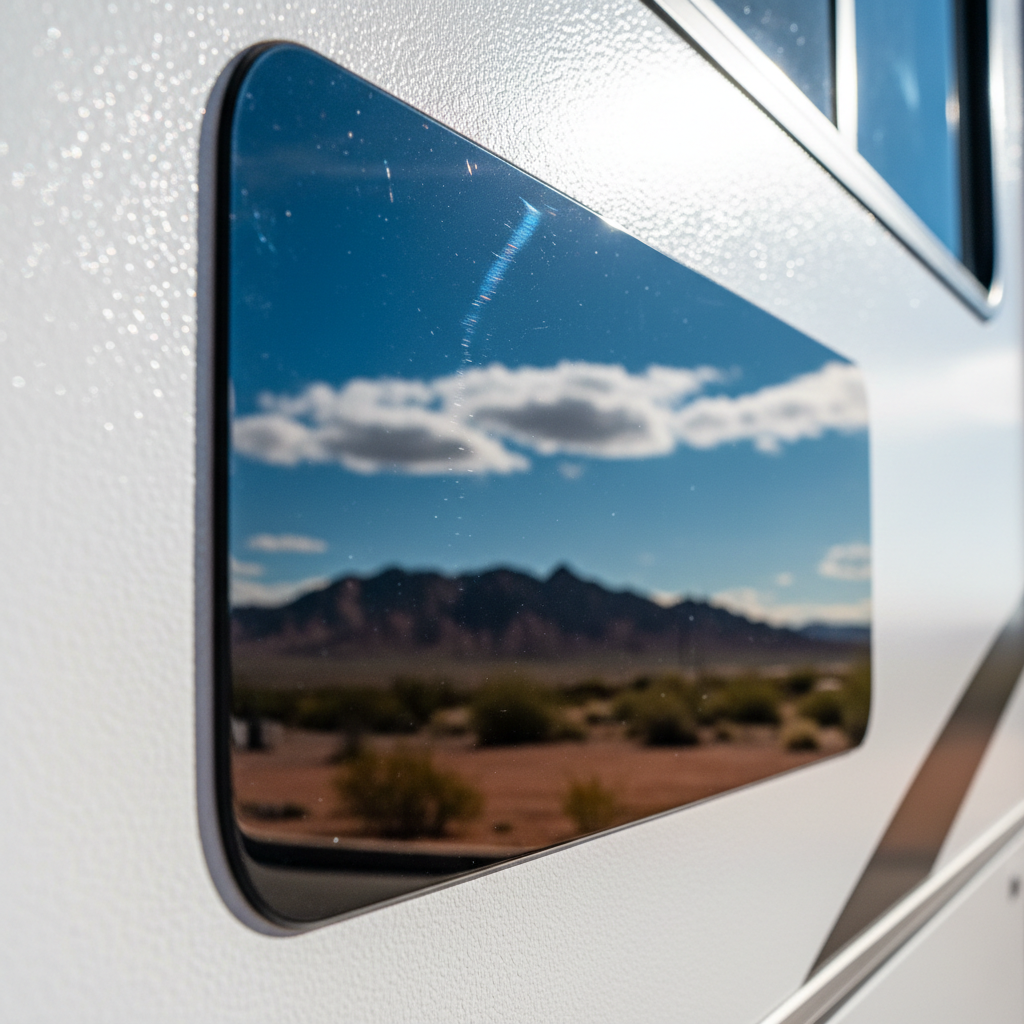
Corrected gelcoat is porous and exposed. Without a sealant, UV oxidation restarts within weeks in the Arizona sun. We apply Gtechniq C2 Liquid Crystal v3 — a spray-on SiO₂ coating that bonds to gelcoat, fiberglass, and painted surfaces, creating a hydrophobic layer rated for 12 months under UV. Rubber seals get 303 Aerospace Protectant to prevent cracking. Awning fabric gets a dedicated spray treatment with Star Brite Waterproofing. The result is a rig that sheds water, resists new contamination, and reflects the sky the way it was built to.
We name the products
because we're proud of them
No "professional-grade detailing products." Every compound, sealant, and protectant we apply is listed below — the same list we hand to fleet managers who need to spec recurring maintenance contracts.
Get a Quote
Built for Your Rig
No flat-rate pricing. A 28-foot Class C with mild road film is a different job than a 45-foot Class A that wintered outside for three years. Tell us what you've got and we'll tell you exactly what it needs.
Tell us about your rig
The more detail you give, the more accurate the quote.